Drill or Deal?
Following a robust period of capital raisings in the fourth quarter of 2025, the ASX resources sector has entered the new year with significantly strengthened balance sheets. This influx of liquidity, paired with sustained strength across the commodity complex, has shifted the strategic focus from capital preservation to capital deployment.
However, the path to value creation is not straightforward. While explorers are funded to pursue greenfields campaigns, the rising cost of discovery and investor appetite for growth is forcing Boards to weigh exploration against acquisition.
With valuations for high-quality assets rising alongside commodity prices, the sector appears primed for a bifurcation, dividing those willing to risk capital on the drill bit from those seeking to secure reserves through consolidation.
This divergence is particularly visible when contrasting the precious metals and critical minerals sub-sectors. In the gold space, producers enjoying record margins have a motive for reserve replacement.
With share prices buoyed by near-record bullion levels, mid-tier producers are actively scanning for single-asset juniors that can offer immediate, high-grade ounces to extend mine life without diluting quality.
Conversely, the critical minerals arena, particularly lithium and rare earths, is likely to see M&A driven by opportunistic value rather than potential for immediate cash flow. The “valuation reset” over the last 12 months means well-capitalised majors and downstream industrial players are positioned to secure strategic assets at a discount, looking past current spot price volatility towards counter-cycle opportunities before the next structural deficit bites.
Perhaps the logic driving such consolidation is best illustrated by the proposed acquisition of Peel Mining by Aeris Resources announced this week. By integrating Peel’s high-grade deposits with Aeris’ existing Tritton processing infrastructure, the deal prioritises capital efficiency and immediate production over the long lead times and high expense of standalone project development. It serves as a clear template for the sector on leveraging “sunk capital” in steel and concrete to unlock the value of nearby geology.
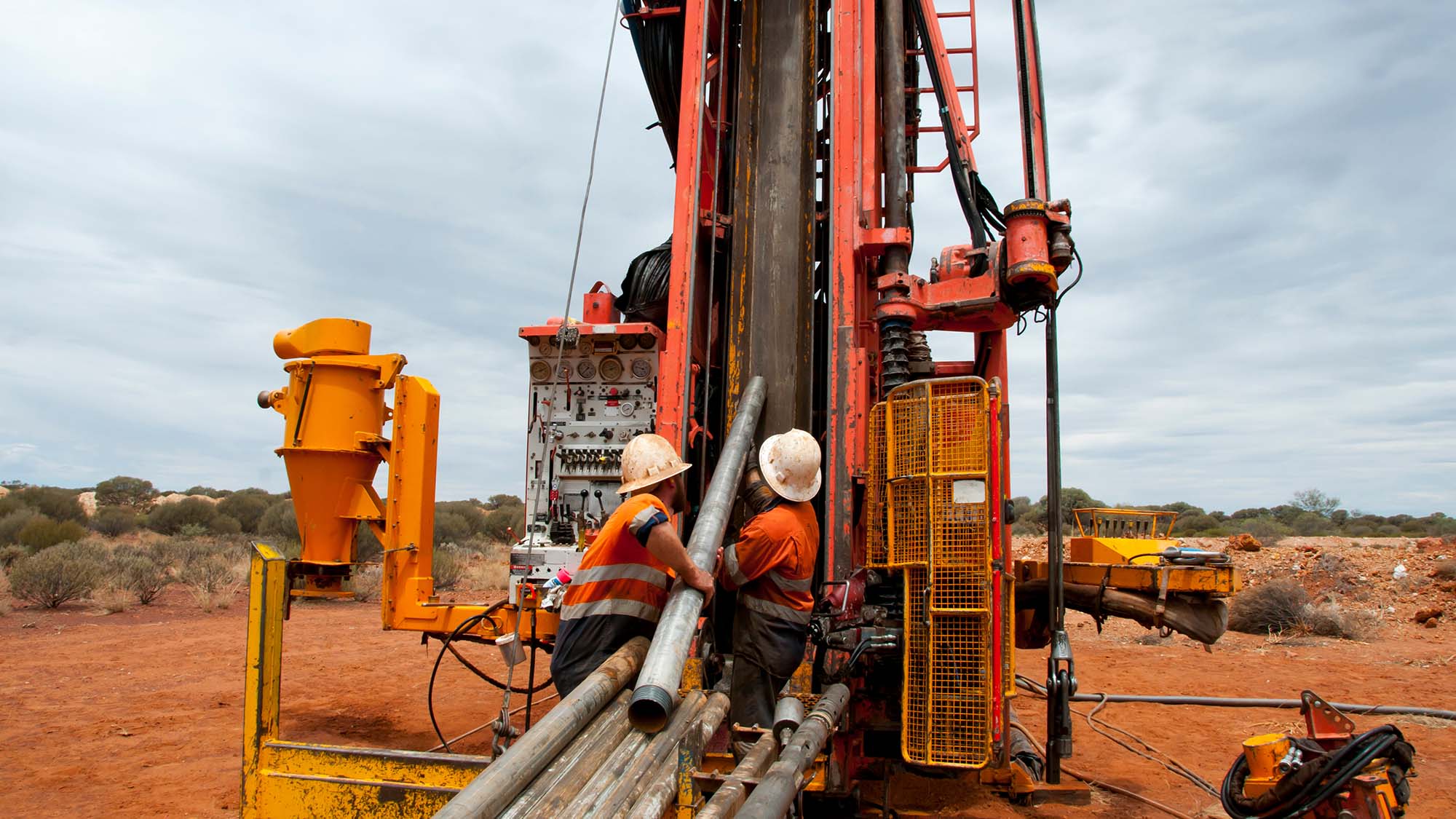
For exploration managers, the immediate challenge lies in capital allocation between brownfields expansion and greenfields discovery. In the current high-cost environment, the logic for brownfields drilling is compelling, with attributes such as proximity to existing infrastructure offering a lower barrier to development and a faster route to monetisation.
Investors, typically risk-averse in volatile markets, are rewarding companies that can demonstrate scale through incremental resource growth that underpins mine life extension. Consequently, there is a weighting of drilling budgets toward near-mine targets where geological understanding is higher.
However, M&A is not the only route to value realisation. There is growing potential for assets to be brought to market via IPOs, particularly through “spin-outs” where specific exploration portfolios are listed separately to attract distinct pools of risk capital. Ultimately, whether through the drill bit, the takeover, or the public float, the sector is moving from a phase of accumulation to one of active deployment.